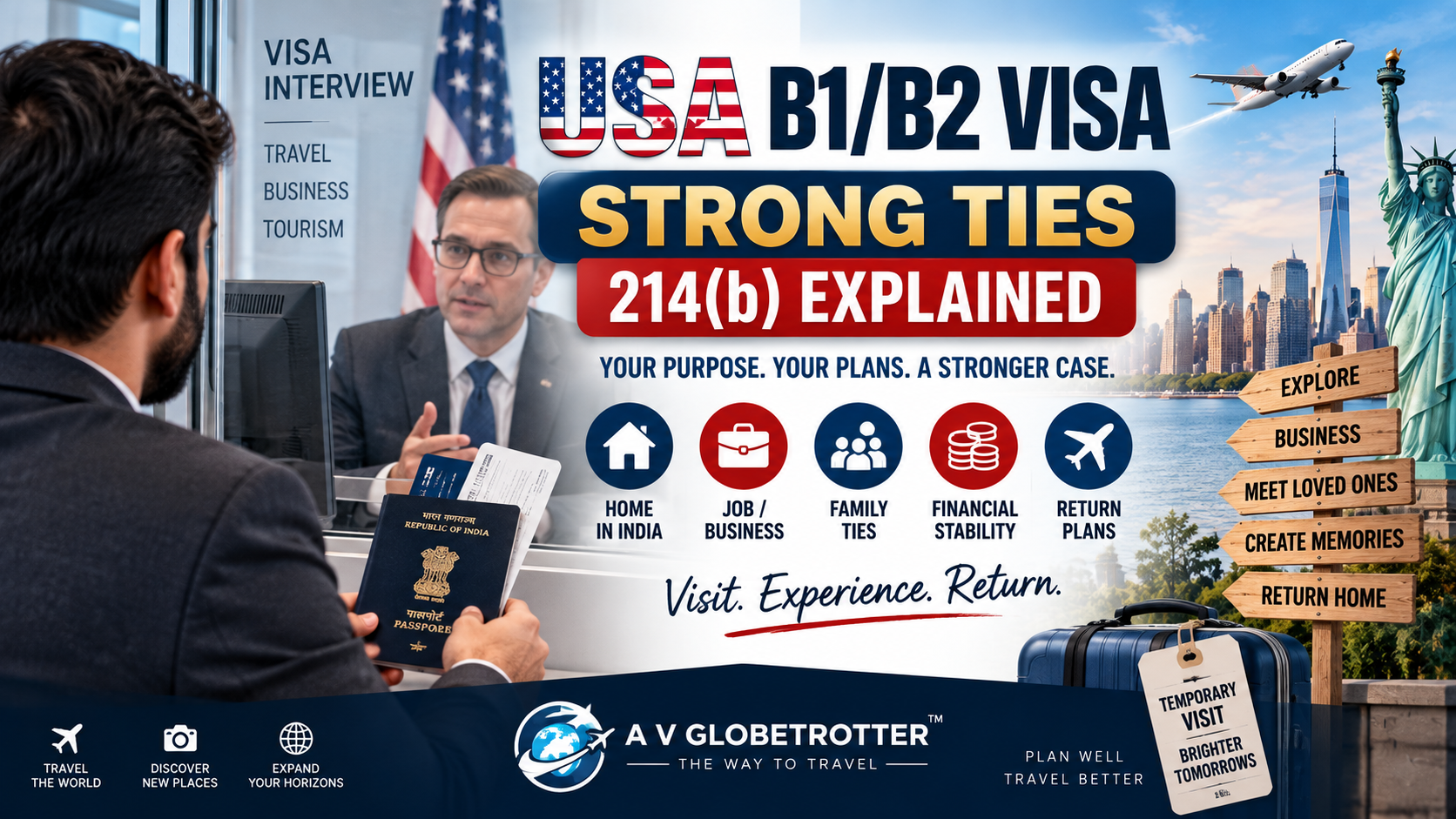
USA B1/B2 Visa DS-160 Form: 10 Common Mistakes to Avoid
Applying for a USA B1/B2 tourist or business visitor visa usually starts with completing the DS-160 Online Nonimmigrant Visa Application.
The DS-160 is an important part of the U.S. nonimmigrant visa process because consular officers use the information entered on the form, together with other information and, when applicable, the visa interview, to determine whether an applicant qualifies for the requested visa. Travel.state.gov
The U.S. Department of State advises applicants to answer DS-160 questions accurately and completely. Incorrect or incomplete information can require corrections and may even result in having to reschedule an interview appointment. Travel.state.gov
Here are some important mistakes applicants should avoid.
1. Entering Incorrect Personal Information
Your name, date of birth, passport details and other personal information should correspond with your passport and supporting records.
Even a simple spelling or passport-number mistake can create unnecessary complications later.
Before submitting the DS-160, carefully review:
- Full name
- Date and place of birth
- Passport number
- Passport issue and expiration dates
- Nationality
- Contact details
2. Providing an Unclear Purpose of Travel
A B1/B2 visa is intended for temporary visits.
B-1 generally covers qualifying temporary business activities, while B-2 generally covers tourism, vacations, visiting family or friends, and certain other temporary activities. Travel.state.gov
Your stated travel purpose should therefore accurately represent what you actually intend to do in the United States.
For example, don't describe your trip as tourism if your actual purpose is something that requires another visa category.
3. Giving Different Information in the DS-160 and Interview
One of the most avoidable problems is providing one answer in the DS-160 and a different explanation during the interview.
Your information regarding:
- Employment
- Income
- Family
- Travel plans
- Previous U.S. travel
- Previous visa applications
- Person paying for the trip
should be truthful and consistent.
This does not mean memorizing your DS-160 word for word. It means making sure the information you submitted accurately reflects your circumstances.
4. Guessing Travel History
The Department of State advises applicants to have information about their previous U.S. travel available when completing the DS-160. Applicants may also be asked about international travel history during the previous five years. Travel.state.gov
If you have travelled internationally, check your old passports, tickets or other records rather than simply guessing dates.
5. Providing Incorrect Employment Details
Applicants sometimes make their job title, salary or responsibilities sound stronger because they believe it will improve their chances.
That approach can create inconsistencies.
Enter your actual:
- Employer or business name
- Position
- Employment dates
- Monthly or annual income as requested
- Work responsibilities
- Business information, if self-employed
Your visa application should reflect your genuine circumstances.
6. Hiding Previous Visa Refusals
A previous visa refusal does not mean that you should provide inaccurate information about your history.
Where the DS-160 asks about previous U.S. visa applications or refusals, answer accurately.
Your current application should be based on your actual circumstances and truthful information.
7. Entering Unrealistic Travel Information
Your intended trip should make sense for your circumstances.
For example, think carefully about:
- Intended length of stay
- Cities you plan to visit
- Where you intend to stay
- Who will pay for the trip
- Approximate travel expenses
You do not need to create artificial plans just to make the application appear stronger.
The Department of State also advises applicants not to make final travel plans or purchase tickets until a visa has been issued. Travel.state.gov
8. Selecting the Wrong Person Paying for the Trip
The DS-160 asks how the trip will be funded.
The answer should represent the actual arrangement.
Depending on the applicant, travel expenses might be paid by:
- The applicant
- A spouse or family member
- A company/employer
- Another legitimate sponsor
Do not select an option simply because you believe it will produce a better visa result.
9. Not Reviewing the DS-160 Before Submission
Once you finish completing the application, review each section carefully.
Check especially:
Personal details → Passport → Travel → U.S. contact → Family → Employment/Education → Previous travel → Security questions
The Department of State specifically warns applicants to answer all DS-160 questions accurately and completely. Travel.state.gov
After completing the application, applicants should keep the DS-160 confirmation/barcode page for the visa process. Travel.state.gov
10. Using Fake Documents or False Information
Never provide fake employment records, false financial information, fabricated invitation letters, altered documents or inaccurate personal information.
The purpose of good visa preparation should be to present your real circumstances clearly, not to manufacture a stronger profile.
A visa consultant can assist with understanding questions, documentation organization and application preparation, but the information submitted must come from the applicant and must be truthful.
What Happens After Completing the DS-160?
Completing the DS-160 is only one part of the visa application process.
Depending on the U.S. embassy or consulate where you apply, the process generally involves:
DS-160 → Visa Fee → Appointment → Supporting Documents → Interview, if required → Consular Decision
The Department of State states that the exact order and procedures can vary by U.S. embassy or consulate, so applicants should follow the instructions for the location where they intend to apply. Travel.state.gov
A V Globetrotter Visa Assistance
A V Globetrotter™ — The way to travel provides tourist and visitor visa assistance, including application guidance, document-checklist assistance, online filing support and visa interview preparation.
For visa assistance:
📲 WhatsApp: +91 875 011 0222
🌐 Website: www.avglobetrotter.com
📧 Email: info@avglobetrotter.com
Important: A V Globetrotter is an independent travel and visa-assistance service and is not affiliated with the U.S. Embassy, U.S. Consulate or U.S. Government. Visa approval is determined solely by the relevant government authority.
USA B1 B2 visa, DS-160 form, DS-160 mistakes, USA tourist visa India, USA visitor visa, US visa application, DS160 form filling, USA visa interview, B1 B2 visa process, USA tourist visa application, US visa mistakes, DS160 guide 2026, USA visa consultant, A V Globetrotter, DS-160 mistake checks